
HOWARD TALKS TO THE FT
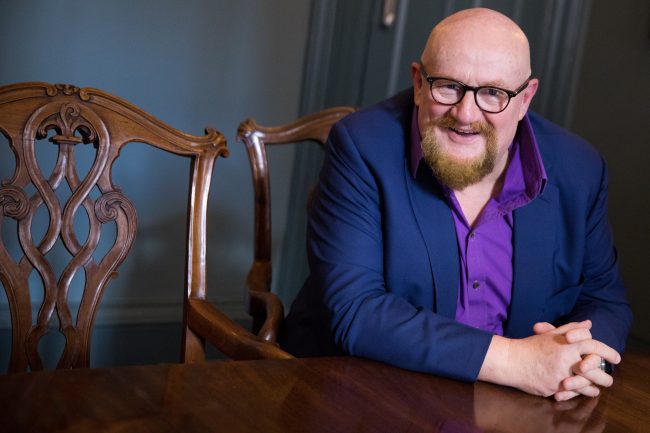
Howard spoke to Josh Spero from the FT recently about adapting during rocky times and branching out in Australia. Read the full interview here.
Howard Panter needs to add another
job title to his already lengthy list: theatre owner, impresario, producer, and
now — as coronavirus pushes back all the projects he had in the works —
un-producer. “We all say now: it’s harder to un-produce than to produce shows,”
he says from his home in England.
Theatre is a group activity, and each time a show has to shift, it requires
dozens of people to realign. “It’s a constantly moving landscape, a jigsaw
puzzle that keeps on being thrown on the floor. You have to pick up all the
pieces and see how they fit back together again. It’s so time-consuming and
exhausting.”
He and Rosemary Squire, his wife and business partner, have several productions
in development through their Trafalgar Entertainment conglomerate, which owns
the Trafalgar Studios theatre in London, an online streaming company, a
ticket-booking company, a performing arts educational business and more. They
must now rearrange all of those putative shows, planning around different
scenarios for when theatres might reopen.
Their latest move, perhaps an unexpected announcement during a pandemic, is
taking over the management of Sydney’s Theatre Royal, dark since 2016 as part
of the redevelopment of the skyscraper it sits under.
This is not Panter and Squire’s first run at the Theatre Royal, though — they
reached an agreement to operate it when they were still part of the Ambassador
Theatre Group, their first cultural conglomerate, but it lapsed after they left
the business in what Panter suggests were not wholly pleasant circumstances.
He says their departure in 2016, nearly 25 years after they founded ATG, was
“for reasons not worth discussing at this moment”, adding “it’s water under the
bridge . . . we wish it well.”
By the time they left, ATG had become a juggernaut, owning and operating 45
theatres in the US, UK and Australia; producing everything from Aeschylus’s
tragic trilogy The Oresteia to camp classic The Rocky Horror Show; marketing
these shows and selling tickets too.
Combining all of these different types of activities under one roof sounds like
modern corporate theory bleeding into culture, but Panter says he and Squire
modelled ATG after an idea that dates back to before the first world war (in
fact, even back to Shakespeare and The Globe), where theatre owners were also
producers of plays. This is “a much healthier situation”, he says, with access
not just to box office but to every other revenue stream that can be wrung from
a theatre — food and drink, merchandise and more.
This model is attractive beyond the box office and into the boardroom. In 2013,
a US private equity firm bought control of ATG, valuing it at £350m, and
Trafalgar Entertainment is backed by Barings, a financial services company with
nearly $340bn under management. Panter says it is this cash-generative
conglomerate model that attracts institutional investors: “It’s a very short
line between the box office and your bottom line.” It is also a real estate
play, with “prime locations in great cities . . . beautiful, unique, wonderful
buildings”.
This sort of integration is the way to go for new producers, he says: “It’s
really tough to just be a producer unless you hit the jackpot with a Hamilton
on your first go. Two or three productions going against you — unless you’re
very well-resourced — can pretty much wipe you out.” And, of course, there is
no formula for a hit. “Nobody saw Cats coming at the time, nobody saw Hamilton
coming.”
Trafalgar Entertainment’s noisiest business, producing plays, might be
unwinding under lockdown, but Panter says its other arms are busy. You can
stream Rodgers and Hammerstein’s musical The King and I, produced by Trafalgar
Entertainment, on Amazon Prime, for example, and Panter says they have a
database of about three-quarters of a million people to market to.
He also points to Trafalgar Entertainment’s education company, Stagecoach,
which has about 50,000 students worldwide. It is preparing six weeks of online
lessons and, in anticipation of schools reopening, six weeks of practical
lessons. Customers are getting extras, such as a masterclass from actor Simon
Callow and, slightly oddly, a choreographer teaching them how to do the “Time
Warp” dance from The Rocky Horror Show. Given, as the “Time Warp”’s lyrics say,
“it’s just a jump to the left/ and then a step to the right,” this might seem a
little more like corporate “synergy” and less like education.
Rocky Horror — a trans glam-rock B-movie fantasia which I must have seen three
or four times at the theatre as a teenager, thrilling at its copper-bottomed
camp — is one of the shows Panter cites as a standout from his career. It has
been “a liberating force”, he says, in spreading sexual tolerance. The other
one he picks is Carmen Jones, which updates Bizet’s Carmen to the second world
war and has an all-black cast. His production ran for a season at the Old Vic
theatre in London from 1991.
Trafalgar Entertainment is not just looking at Australia as a new market;
Panter wants to use it as a base to take shows across Asia. Isn’t there a
danger that globalising culture like this, especially with financial might
behind it, might push local productions out of the way?
Panter says English-language shows are often seen as the “authentic” version
abroad, but adds that he expects “greater and greater integration” between
Asian stories and the western theatrical business. “It’s one of the things
we’re discussing with folk in India, how we can create a form of musical
theatre that is not Bollywood on the one hand and not Broadway on the other — a
new voice.”
Panter, who has furloughed around half his workforce, believes the UK is not
doing enough to protect the many self-employed workers in its cultural sector
who are sitting at home under lockdown with no money coming in. Compare that
with France, where President Macron “has gone on record as saying that they’re
going to support the performing arts till August 2021 . . . because it’s good
for the cultural soul of France. It would be quite good if someone [in the UK]
said something along those lines.”
Howard Panter needs to add another job title to his already lengthy list: theatre owner, impresario, producer, and now — as coronavirus pushes back all the projects he had in the works — un-producer. “We all say now: it’s harder to un-produce than to produce shows,” he says from his home in England.
Theatre is a group activity, and each time a show has to shift, it requires dozens of people to realign. “It’s a constantly moving landscape, a jigsaw puzzle that keeps on being thrown on the floor. You have to pick up all the pieces and see how they fit back together again. It’s so time-consuming and exhausting.”
He and Rosemary Squire, his wife and business partner, have several productions in development through their Trafalgar Entertainment conglomerate, which owns the Trafalgar Studios theatre in London, an online streaming company, a ticket-booking company, a performing arts educational business and more. They must now rearrange all of those putative shows, planning around different scenarios for when theatres might reopen.
Their latest move, perhaps an unexpected announcement during a pandemic, is taking over the management of Sydney’s Theatre Royal, dark since 2016 as part of the redevelopment of the skyscraper it sits under.
This is not Panter and Squire’s first run at the Theatre Royal, though — they reached an agreement to operate it when they were still part of the Ambassador Theatre Group, their first cultural conglomerate, but it lapsed after they left the business in what Panter suggests were not wholly pleasant circumstances.
He says their departure in 2016, nearly 25 years after they founded ATG, was “for reasons not worth discussing at this moment”, adding “it’s water under the bridge . . . we wish it well.”
By the time they left, ATG had become a juggernaut, owning and operating 45 theatres in the US, UK and Australia; producing everything from Aeschylus’s tragic trilogy The Oresteia to camp classic The Rocky Horror Show; marketing these shows and selling tickets too.
Combining all of these different types of activities under one roof sounds like modern corporate theory bleeding into culture, but Panter says he and Squire modelled ATG after an idea that dates back to before the first world war (in fact, even back to Shakespeare and The Globe), where theatre owners were also producers of plays. This is “a much healthier situation”, he says, with access not just to box office but to every other revenue stream that can be wrung from a theatre — food and drink, merchandise and more.
This model is attractive beyond the box office and into the boardroom. In 2013, a US private equity firm bought control of ATG, valuing it at £350m, and Trafalgar Entertainment is backed by Barings, a financial services company with nearly $340bn under management. Panter says it is this cash-generative conglomerate model that attracts institutional investors: “It’s a very short line between the box office and your bottom line.” It is also a real estate play, with “prime locations in great cities . . . beautiful, unique, wonderful buildings”.
This sort of integration is the way to go for new producers, he says: “It’s really tough to just be a producer unless you hit the jackpot with a Hamilton on your first go. Two or three productions going against you — unless you’re very well-resourced — can pretty much wipe you out.” And, of course, there is no formula for a hit. “Nobody saw Cats coming at the time, nobody saw Hamilton coming.”
Trafalgar Entertainment’s noisiest business, producing plays, might be unwinding under lockdown, but Panter says its other arms are busy. You can stream Rodgers and Hammerstein’s musical The King and I, produced by Trafalgar Entertainment, on Amazon Prime, for example, and Panter says they have a database of about three-quarters of a million people to market to.
He also points to Trafalgar Entertainment’s education company, Stagecoach, which has about 50,000 students worldwide. It is preparing six weeks of online lessons and, in anticipation of schools reopening, six weeks of practical lessons. Customers are getting extras, such as a masterclass from actor Simon Callow and, slightly oddly, a choreographer teaching them how to do the “Time Warp” dance from The Rocky Horror Show. Given, as the “Time Warp”’s lyrics say, “it’s just a jump to the left/ and then a step to the right,” this might seem a little more like corporate “synergy” and less like education.
Rocky Horror — a trans glam-rock B-movie fantasia which I must have seen three or four times at the theatre as a teenager, thrilling at its copper-bottomed camp — is one of the shows Panter cites as a standout from his career. It has been “a liberating force”, he says, in spreading sexual tolerance. The other one he picks is Carmen Jones, which updates Bizet’s Carmen to the second world war and has an all-black cast. His production ran for a season at the Old Vic theatre in London from 1991.
Trafalgar Entertainment is not just looking at Australia as a new market; Panter wants to use it as a base to take shows across Asia. Isn’t there a danger that globalising culture like this, especially with financial might behind it, might push local productions out of the way?
Panter says English-language shows are often seen as the “authentic” version abroad, but adds that he expects “greater and greater integration” between Asian stories and the western theatrical business. “It’s one of the things we’re discussing with folk in India, how we can create a form of musical theatre that is not Bollywood on the one hand and not Broadway on the other — a new voice.”
Panter, who has furloughed around half his workforce, believes the UK is not doing enough to protect the many self-employed workers in its cultural sector who are sitting at home under lockdown with no money coming in. Compare that with France, where President Macron “has gone on record as saying that they’re going to support the performing arts till August 2021 . . . because it’s good for the cultural soul of France. It would be quite good if someone [in the UK] said something along those lines.”
